

Why global juggernauts are flocking to Australian renewables
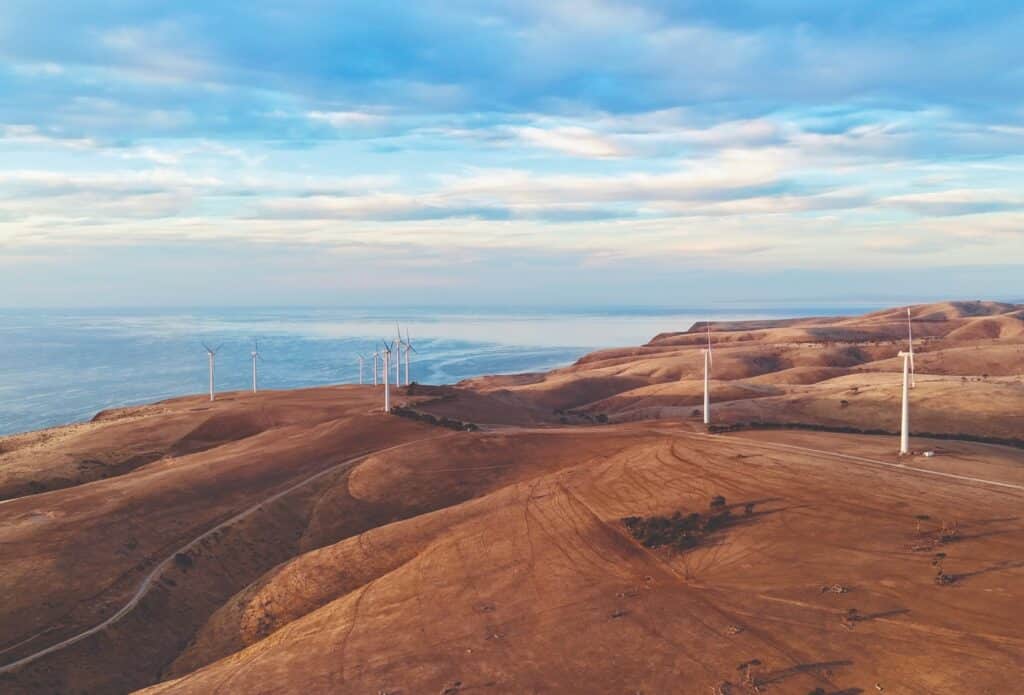
The Australian renewable energy industry has become a marketplace of international players. Why is this the case?
Australia has become a hive of international investment in recent years as companies flock to the country’s burgeoning renewable energy sector.
Pan across Australia’s wind, solar and battery projects and you’ll find many European brands are bringing these to fruition, including Neoen, European Energy, RWE and Iberdrola, while Asia is also significantly represented through names such as ACEN, HD Renewable Energy and Sembcorp Industries.
This accompanies Australia’s clean energy brigade comprising Squadron Energy, Tilt Renewables, Atmos Renewables and Akaysha Energy, to name a few.
So what is driving so much international activity in Australian renewables, and what does the local mergers and acquisitions (M&A) landscape look like?
“International investors are drawn to Australia’s exceptional natural resources, where world-class solar and wind potential are complemented by an expansive landmass ideal for large-scale energy deployment,” Corrs Chambers Westgarth partner Simon Huxley told Energy.
“Further, Australia offers a stable legal and regulatory environment, with legislated net-zero targets providing certainty as to continued government funding and support for renewable assets.”
Huxley said Australia has sent a clear signal that renewable energy is the path forward, underpinned by the country’s goal of 62–70 per cent emissions reduction by 2035 from 2005 levels.
Many initiatives have been created to support this, with the Clean Energy Finance Corporation (CEFC) and Australian Renewable Energy Agency (ARENA) playing important roles.
The Capacity Investment Scheme (CIS) has also played its role, with the Federal Government holding regular auctions to attract tenders from renewable energy developers. Those successful receive long-term underwriting for their projects, decreasing financial risk for investors.
Recipients in CIS Tender 4 included Tilt Renewables (for its Liverpool Range wind farm), EDPR (for its Merino solar farm), Potentia Energy (for its Tallawang solar–BESS hybrid project) and Equis (for its Bell Bay wind farm).
Eight of the 20 companies successful in CIS Tender 4 are internationally headquartered.
“The CIS buoys investor sentiment as its revenue support mechanisms allow institutional investors to treat CIS-backed projects as being more closely aligned to stable, ‘infrastructure-style’ assets rather than higher-risk energy plays,” Huxley said.
The CEFC, ARENA and CIS form part of Australia’s ‘Net Zero Plan’ released in September 2025, as does the ‘Nelson Review’, which provides recommendations for improving the National Electricity Market (NEM) through renewable, firming and storage capacity investment while addressing price volatility.

Mergers and acquisitions
What comes with keen international participation and investment is increased M&A activity, as companies look to acquire what they don’t have previously, or shuffle their chess pieces strategically.
Notable M&A deals in the Australian renewable energy sector in 2025 included Sembcorp Industries’ $6.5 billion acquisition of Alinta Energy announced in December.
The Singaporean state-owned energy giant sees the transaction as an opportunity to combine Alinta’s “local market expertise” with its “global renewables capability” as it looks to drive renewables growth in Australia.
While Alinta has historically been a coal- and gas-driven gentailer, the company has grown its investment in renewable energy in recent years, with investment in a host of wind and solar farms across Australia.
Sembcorp, on the other hand, boasts a 28.3GW portfolio of renewables, storage and gas assets across the Asia Pacific, the Middle East and Europe, and runs Singapore’s largest utility-scale energy storage system.
Announced in June, KKR’s $1.7 billion acquisition of Zenith Energy was also significant.
Zenith said the deal with the global investment firm would strengthen its capacity to “scale renewable and hybrid energy solutions across Australia’s most remote and energy-intensive industries”.
AGL offloaded its 19.9 per cent stake in Tilt Renewables to the Queensland Investment Corporation (QIC) for $750 million in November to support “balance sheet flexibility”, while Neoen and Potentia Energy also made moves, with the former offloading its Victorian assets to HMC Capital for $950 million and the latter adding over 1GW of Australian renewable energy assets last year.
Huxley said Australia’s renewables sector was seeing a “wave of consolidation”.
“By accumulating numerous small assets into expansive, diversified portfolios, major players can achieve significant economies of scale, reduce operational costs and better manage the risks associated with intermittent generation,” he said.
“We expect this will continue, with the sector moving from a fragmented landscape of many small developments towards a concentrated market of major ‘platform’ owners.”
Huxley also observed more companies willing to invest in earlier-stage renewable energy projects, rather than a historical preference to only invest in “construction-ready” assets.
“Early entry allows investors to capture higher growth potential and secure pipelines in a highly competitive market,” he said.
Government-owned SEC has become an increasingly active player in Victoria’s renewable energy industry, most recently playing a key role in financing the $1.1 billion Melbourne Renewable Energy Hub (MREH) that opened in December.
SEC acquired a 38.5 per cent stake in MREH in December 2023, providing important early capital for a project.
“There were two ways we thought we could help improve the MREH,” SEC executive general manager – assets Lane Crockett told Energy.
“One was by bringing our equity to bring it to market more quickly. The other was to upsize the third battery from two hours to four hours in duration and commit to 100 per cent of the offtake from that.
“The SEC is of the view that some longer-duration storage is required in the market for system security.”
The path ahead
Looking ahead to 2026, Huxley sees greater M&A emphasis on energy storage.
“As renewables continue to produce a greater share of Australia’s electricity, the grid will require further reliance on storage solutions to manage variability and firm supply,” he said.
“We expect that in 2026, renewable projects without integrated batteries may struggle to attract investment (or be the subject of M&A activity), due to growing recognition of batteries’ ability to maximise energy output and mitigate curtailment risk.”
Huxley said batteries transform conventional solar and wind farms into a “sophisticated trading asset”.
“(This allows) owners to access and ‘stack’ a number of potential market revenue opportunities, including tolling arrangements and frequency control ancillary services,” he said.
There’s an expectation that M&A interest in wind generation will continue to cool, Huxley said, driven by escalating capital costs and social licence challenges associated with large-scale wind infrastructure.
In its 2024 Integrated System Plan (ISP), AEMO said wind generation would “dominate installations” through to 2030, accounting for 70 per cent of new utility-scale variable generation by the end of the decade.
But in its Draft 2026 ISP released in December, of the 58GW of grid-scale wind and solar capacity required by 2030, solar made up 32GW of this, with wind comprising 26GW.
While he acknowledged the continued importance of wind, Huxley expects such assets to be developed by sophisticated developers who have “expertise in alternative revenue arrangements” and the ability to “invest at scale”.
“Investment in wind in 2026 will likely be driven by large institutions with the capital to support developers achieve scale and the longer time horizons required to take these complex projects to commercial operation and profitability,” he said.
International investment and M&A are driving an increasingly globalised Australian renewable energy sector, steadily turning a fragmented market of small projects into a more consolidated landscape of platform owners.
While Australia has a significant road ahead to align renewable energy construction with grid capability, there’s no doubting the role of solar, wind, storage and firming infrastructure in a 2030 and 2050 energy market.
As long as the policy environment remains amenable, that constancy is sure to underpin continued investment interest.
This feature appeared in the March edition of Energy.
More information: https://www.energymagazine.com.au/why-global-juggernauts-are-flocking-to-australian-renewables/
