
UK celebrates 25 years of offshore wind power
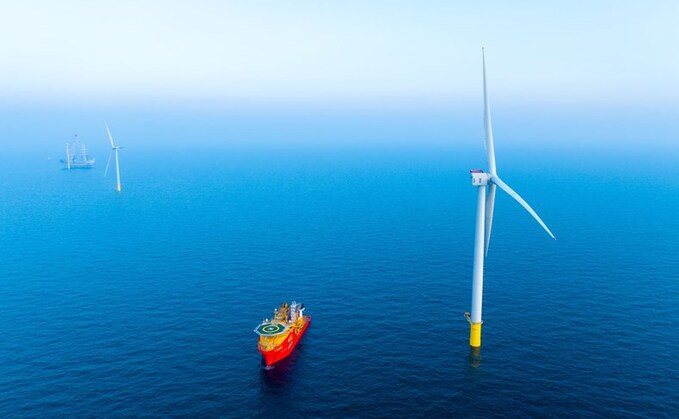
New analysis reveals how offshore wind farms now meet nearly a fifth of UK electricity demand
The UK will this month mark the 25th anniversary of its first offshore wind farm, which came online in December 2000 at a site off the coast of north east England.
The Blyth project was the world’s first ‘truly offshore’ wind farm in the world, boasting 4MW of capacity and providing enough power for around 3,000 homes each year.
According to a new analysis from think tank Ember, released to mark the 25th anniversary of the offshore wind industry, the Blyth wind farm joined a power system dominated by 25GW of coal power and 23GW of gas power.
Since then, 47 offshore wind farms have been brought online in Britain, delivering 16GW capacity and providing enough power for more than 16 million homes annually. The sector also now employs 40,000 people, having added 7,000 jobs in the last two years alone.
The surge in offshore wind generation has underpinned a clean energy transition that has seen clean energy sources account for over 50 per cent of the electricity mix in recent years and enabled the closure of Britain’s last coal power plant last year.
“The engineering and innovation in British offshore wind over the last 25 years should be a real point of pride,” said Ember analyst Frankie Mayo. “With seabeds and wind speeds second-to-none for this kind of technology, Britain has truly led the world in showing its potential.”
The offshore wind sector is expected to continue to grow rapidly over the next 25 years, with the government aiming to deliver around 50GW of capacity by 2030 and potentially up to 125GW by 2050.
The results of the latest clean power contract auction are set to be announced next month, which will provide clarity on the pipeline of new offshore wind projects through to 2030.
The government and industry are also ramping up investment in ports to support the development of an expanded fleet of offshore wind projects, including new floating wind farms.
Ember’s report highlighted how there are now 2,000 companies in the UK in the wind energy supply chain, with major hubs emerging in Hull, Inverness, Grimsby, and Cromarty Firth, which just secured £55m in grant funding to help facilitate deep water wind turbine projects.
“Investing in offshore wind isn’t just about clean power,” said Mayo. “It’s about new jobs, skills, and billions in investment flowing to Britain’s coastal communities.”
Juergen Maier, chair of Great British Energy, said: “Over the last 25 years Britain’s offshore wind industry has made tremendous progress and now powers millions of homes. There is much to celebrate, yet our greatest potential still lies ahead.
“Working alongside the industry, Great British Energy is focused on continuing to strengthen offshore wind and the supply chain. Our goal is to make the UK a global leader in technologies like floating offshore wind, exporting our expertise while generating gigawatts of clean, home-grown power.”
His comments were echoed by Steve Wilson, director of offshore wind at SSE Renewables, who said the industry was continuing to make significant progress in delivering larger projects capable of providing millions of homes with clean power.
“Twenty-five years from the delivery of the UK’s first offshore wind farm, we’re now breaking real barriers in offshore wind execution with the construction of the 3.6GW Dogger Bank Wind Farm which will be the world’s largest offshore wind farm when built, capable of powering around six million homes annually,” he said. “Not only is Dogger Bank the first project to be built so far offshore, and in the harshest of marine conditions, but it is also paving the way for large-scale offshore wind delivery being the first High Voltage Direct Current (HVDC) connected wind farm in the UK and the first globally to use a 10MW-plus platform in an offshore environment. The delivery of a project of this scale commercially is a real demonstration of the UK’s leadership in offshore wind.”
The industry has faced headwinds in recent years, with higher interest rates and material costs driving up the cost of some projects. Some developers have shelved projects, while others have seen costs rise.
But Wilson said the UK remained well positioned to deliver new projects in support of the government’s climate and clean energy goals. “While the offshore wind sector is facing headwinds globally, the ambition shown in the UK’s Clean Power Mission can help kickstart the sector, enabling it to drive further cost reductions and deployment into ever deeper waters around the world, and capturing economic opportunities here in the UK whilst doing so,” he said.
Kayte O’Neill, chief operating officer at the National Energy System Operator (NESO), said: “It’s hard to believe how far Britain has come on its clean power journey over the past quarter of a century, with renewables now producing around 60 per cent of our electricity – up from just three per cent in the year 2000.
“We’re now a global leader in offshore wind power, home to five of the largest wind farms in the world. Just last month Britain broke another maximum wind record, generating 22,711 MW – enough energy to power over 22 million homes across the country. It really shows what’s possible when we back clean home-grown energy as part of our generation mix.”
More information:https://www.businessgreen.com/news/4522876/uk-celebrates-offshore-wind-power