
Renewable developer looks to Australian outback for 10 gigawatts of wind, solar and battery projects
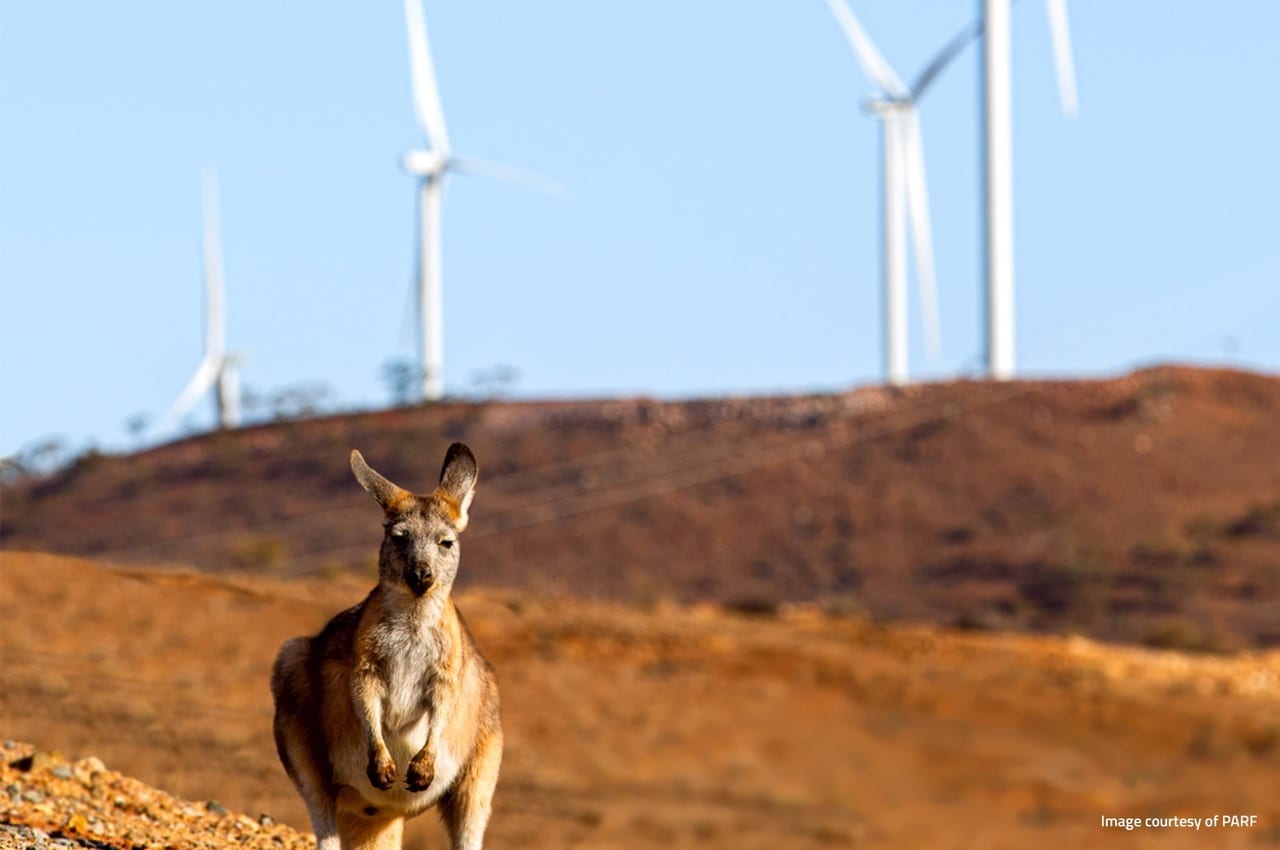
One of Australia’s leading renewable energy developers has turned its focus to the Australian Outback – initially in regions north of Broken Hill – to look for up to 10 gigawatts (GW) of new wind and solar projects.
Tilt Renewables says it is looking to tap into the excellent wind and solar resources in the far west of NSW, although its plans depend on having more transmission lines built to the connect the resources to the grid.
The company already owns several assets near Broken Hill, including the 200 MW Silverton wind farm and the 50 MW Broken Hill solar farm, but is looking for more potential projects north of the mining city, as well as in remote areas of Queensland, South Australia and even Victoria.
But it is the Broken Hill region that excites it most. The company describes its “Outback Energy” project as a potential game changer in Australia’s green energy transition, largely because of the sheer scale of the potential projects, and presumably because it may face fewer planning hurdles.
A brochure circulated by Tilt Renewables cites the low population density, minimal land use conflicts, and fewer threatened ecological species as reasons to look at far western NSW.
“We are still in the early investigation stage, but we have had some preliminary discussions with local Leaseholders, the Pastoralist Association, Wilyakali Aboriginal Corporation and other stakeholders about hosting new renewable energy assets,” Tilt CEO Anthony Fowler said in a statement.
“Our experience at Broken Hill and Silverton has demonstrated to us just how good the wind and solar resource in the region is, so it makes sense to explore further opportunities in the area”.
Fowler says the solar resource in the far west of NSW is excellent, but the greater attraction may be the wind resources, which are mostly at night and “when we need energy the most.”
NSW has a plan to replace all of its ageing coal fired generators within a decade, but the pace of development has not been fast enough to date, allowing the timelines for two coal fired power station closures – at Eraring and Vales Point – to slip by several years.
The main choke point is wind farm development, hampered by planning issues, community consent and network constraints. Only wind project is currently under construction in the whole state – Squadron Energy’s Uungula – and no others appear likely to begin before the end of the year.
Tilt has actually been one of the most active recent developers of wind farms in Australia, having recently secured off take agreements and reaching financial close on two smaller projects, Waddi in Western Australia and Palmer in South Australia.
Its last completed project in NSW was Rye Park, and it also owns the gigawatt scale Liverpool Range wind project in NSW, which secured an underwriting agreement under the federal government’s Capacity Investment Scheme.
Fowler emphasised that the plans were at a very early stage, and any projects were likely to be “several years away”, but it was making its plans known now because it wanted to be “open and transparent” about its intentions.
“A key issue we need to resolve before there can be any new renewable energy projects in the region is to secure secondary transmission connections to the east coast”.
“Although this is a long-term concept, and there is much to be done, harnessing the incredible renewable resource of far western NSW has the potential to play an important role in Australia’s energy transition and in the process provide new opportunities for regional growth.”
Tilt says made a submission to AEMO in January seeking consideration of new transmission lines to unlock the region’s renewable energy resource.
It was one of six companies – along with Squadron Energy, Ark Energy, Voyager Renewables and Spanish giants Iberdrola and Acciona to propose an “inland renewable zone” that could support more than 10GW of new renewable power by the time it is fully operational.
That proposal also noted that existing renewable energy zones are constrained by social licence and land use issues, as well as limited hosting capacity, as many developers are discovering to their dismay in the south-west REZ.
More information:https://reneweconomy.com.au/renewable-developer-looks-to-australian-outback-for-10-gigawatts-of-wind-solar-and-battery-projects/
