

Largest solar-battery financing deal just the tip of the iceberg, as bankers pile into fashionable hybrids
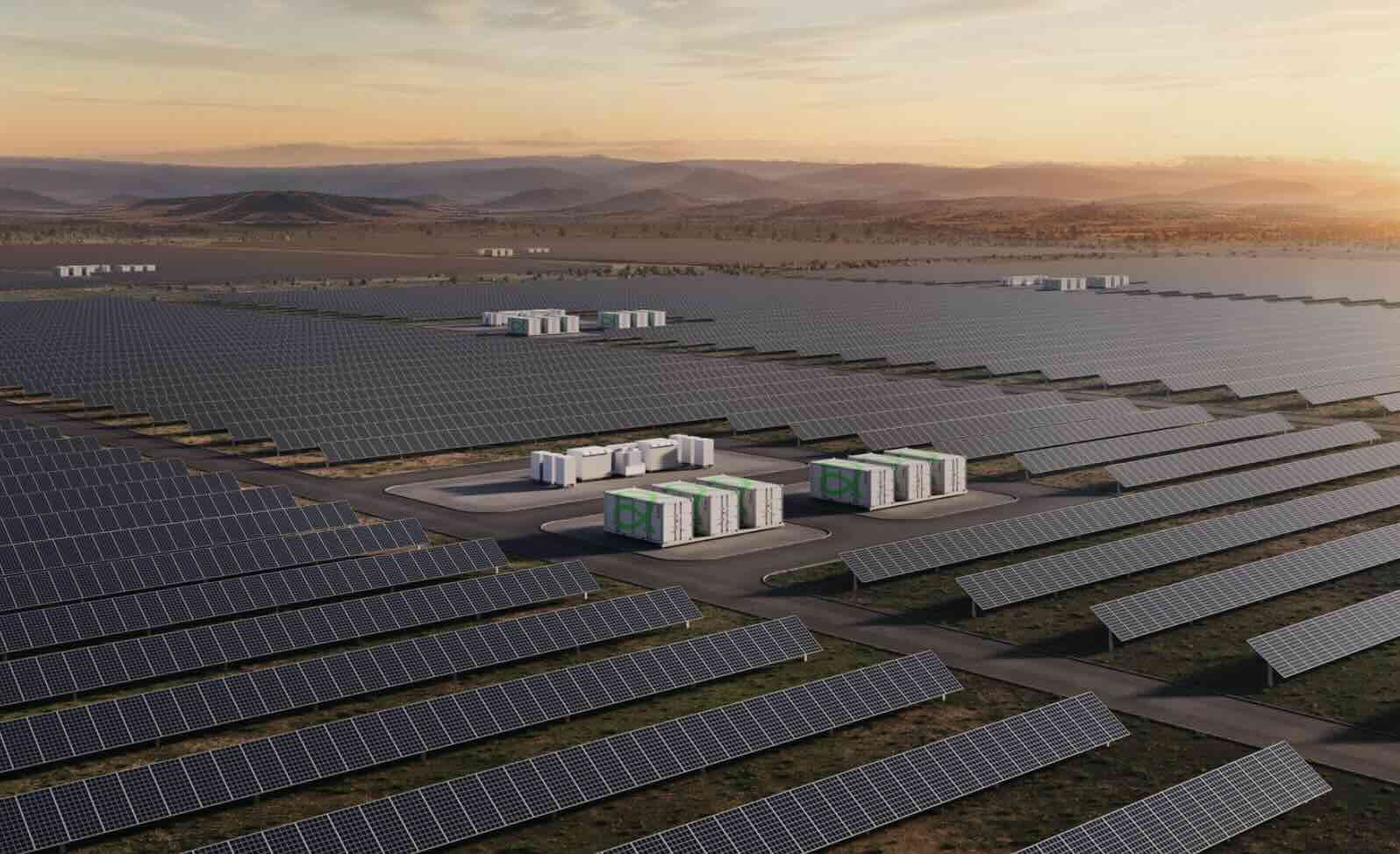
This week’s announcement by Edify Energy that it had secured the finance for the country’s biggest solar and battery hybrid projects may be just the tip of the iceberg, with its bankers pledging enough funds to support three times as much capacity.
The Smoky Creek and Guthrie’s Gap solar and battery hybrids, as we reported earlier this week, are landmark projects for a number of reasons, and not just because the neighbouring projects are the biggest – rated at a combined 600 megawatts (MWac, or 720 MWp), and with 600 MW and 2,400 megawatt hours of battery storage.
That set-up means the output of the solar produced at the two solar farms can provide many hours of “firm power”, spread out over four hours at full capacity, or 12 hours at lower capacity, depending on the need of its major client, the giant aluminium smelter and alumina refineries in Gladstone.
As Edify Energy notes, the contribution of the two solar-battery hybrids is one of the most advanced examples of firmed solar powering heavy industry, debunking the mainstream media and political narrative that renewables cannot power energy-intensive industries.
Rio Tinto is committed to shutting down the ageing and polluting coal fired power generator in Gladstone, and replacing it with a mix of wind, solar, battery storage and likely a small amount of other “firm” power.
The solar-hybrids remain the key, because they are matching or even beating wind on price, and certainly winning the race in terms of modularity and speed to market.
The latest New Energy Outlook from Bloomberg highlights the fact that solar and batteries are the two go-to technologies, thanks to “massive overcapacity and falling prices”, with solar emerging as the biggest generation source of any across the globe by 2032.
The growth from battery storage, albeit from a lower base, is expected to be even more spectacular and rise 17-fold from 223 gigawatts now to 3.8 terawatts in less than a decade.
Their progress is so stunning – and such a threat – that the fossil fuel industry is now turning its misinformation machines towards these technology choices, as evidenced by the increasing campaign against solar and battery projects on social media.
See: Farmer seeks solar: Queensland developer says PV plans will help rejuvenate barren land
Bankers and investors are also keen. Edify has developed probably the largest pipeline of solar-battery hybrid projects in the country, and last year attracted the interest, and a $1.2 billion accepted takeover bid, from Canada’s La Caisse.
The Quebec-based investment group is one of a number of global funds management and investor giants – such as Brookfield, BlackRock and KKR – that have been drawn to Australia in the pursuit of either standalone battery or solar and battery hybrid projects.
The need in Australia is urgent. Its already diminished fleet of coal fired generators are getting older and more unreliable, and despite the promises of the right-wind Liberal, National and One Nation parties, will be unable to limp on for much longer.
Australia’s task of replacing them, and ensuring enough capacity for its electrification of homes, industry, cars and heavy transport, not to mention data centres, is depending increasingly on the ability to get these solar and battery hybrids built in good time.
The financing deal secured for Smoky Creek and Guthrie’s Gap turns out to be much bigger than needed for these projects, which will be built by Malaysia-based DT Infrastructure for around $1.2 billion.
The financing deal locked in by Edify and La Caisse – a first of its kind “greenfield portfolio financing structure” put together with 14 local and international banks – commits $3.35 billion to these and other projects.
Edify is not yet saying which projects will follow under this deal, but the next in line are likely to be another set of co-located projects, Ganymirra and Majors Creek near Townsville, which will combine 300 MWac of solar (360MWp) and 300 MW, and 1,200 MWh of battery storage. DTI has already been announced as the main EPC contractor.
There is also another similar-sized project at Nowingi in Victoria. All of these projects – Smoky Creek, Guthrie’s Gap, Ganymirra, Majors Creek and Nowingi – have secured the right to underwriting agreements under the federal government’s Capacity Investment Scheme.
These deals essentially eliminate much risk by protecting the projects on the downsize, enabling the developers and owners to offer a more competitive price to their principal off-takers. Solar-battery hybrids, because they can deliver power into key evening and other demand peaks, are well suited to this.
Edify has other projects in its pipeline. The smaller Burroway project in NSW, rated at 100 MW of solar, and 100 MW, 400 MWh of battery storage, recently got approval from the NSW Independent Planning Commission despite objections from long-distance opponents.
That, of course, is good news for the federal government and its ability to reach, or get close to, its 82 per cent renewables target by 2030.
Even with the CIS, few large scale wind and solar projects have reached financial close, but the establishment of a first of its kind financing platform, and the fact that many large scale solar and battery hybrids are now close to pressing the green button, looks promising.
The challenge remains, however, in getting large wind projects across the line. Some like Windlab’s 1.4 GW Bungaban wind project will do so – because they have a big, powerful and committed buyer like Rio Tinto. Others will struggle without other such committed buyers – and that remains the biggest challenge for the industry now.
More information:https://reneweconomy.com.au/largest-solar-battery-financing-deal-just-the-tip-of-the-iceberg-as-bankers-pile-into-fashionable-hybrids/
