
Engie-backed offshore wind project begins seabed investigations in Gippsland zone
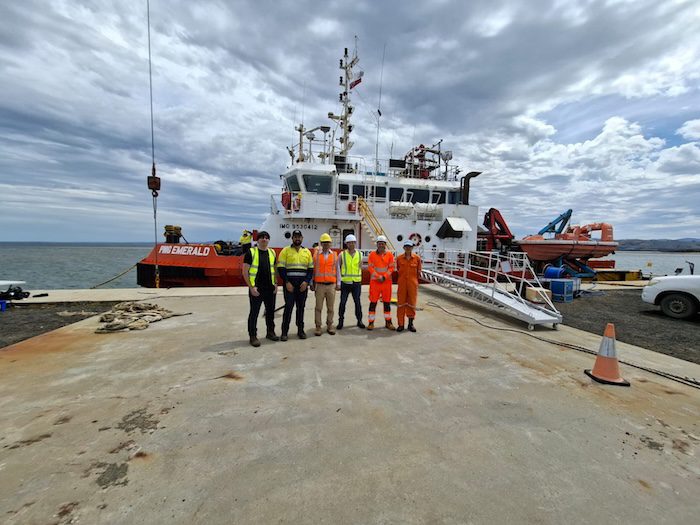
Offshore wind developer Ocean Winds has started four months of geophysical surveys for its 1.3 gigawatt (GW) High Sea Wind project.
Ocean Winds, a joint venture between Portugal’s EDP Renewables and France’s Engie, is one of nine remaining feasibility licence holders in the Gippsland zone and its project is the furthest from shore.
The surveys will use sonar to investigate what the seabed looks like, which will then help Ocean Winds decide where to put turbines and lay cables.
“Comprehensive geophysical data is fundamental to designing an offshore wind project that is safe, efficient, and environmentally responsible,” the developer’s Pelayo Rodríguez Alonzo said in a statement.
“These surveys mark an important milestone for High Sea Wind as we continue to build a strong technical foundation.”
Perth-based EGS Australia will lead the survey, using nearshore and deepwater vessels.
Ocean Winds says the “non‑invasive technologies” are low impact and marine mammal observers are on all vessels during the operation.
The data collected during this campaign will be integrated with future environmental and technical investigations, supporting the project’s progression through the regulatory assessment process,” the Madrid-based developer said.
The latest data gathering exercise comes after Ocean Winds launched studies for offshore wind and metocean, a combination of meteorology and oceanography, in December last year.
The High Sea Wind project will be 76km offshore and sit in waters that are on average 65m deep, across an area that takes in 150 square kilometres.
Ocean Winds is pressed ahead with its project, as it looks to add to the 21 GW of offshore wind capacity in development or operation currently in its portfolio.
The feasibility licences the nine remaining holders are working under last for up to seven years.
They allow proponents to conduct a range of activities including research and marine surveys, detailed environmental assessments and seeking approval under the government’s Environment Protection and Biodiversity Conservation (EPBC) Act.
However, Victoria has a target of 9 GW of offshore wind by 2040 and the total capacity of the remaining licensed projects is 16.3 GW, suggesting more are likely to withdraw in the future.
AGL is out, pulling its 2.5 GW Gippsland Skies proposal from the mix in order to focus on onshore batteries. This was not unexpected by some in the industry.
In July, Spanish company Bluefloat Energy dumped the 2.5 GW Gippsland Dawn proposal, and there is uncertainty around Origin Energy’s and RES Australia’s 1.5 GW Navigator North proposal after key staff being laid off in September.
Encouragingly however, Victoria now has a timeline for its first offshore wind auction, to be held in August for the first 2 GW that it wants in place by 2032.
The auction will award offshore wind projects a contract-for-difference (CfD) – a common government support mechanism for driving early renewable energy development, by providing a generator with a fixed price for electricity over a set period – as well as an availability payment.
More information:https://reneweconomy.com.au/engie-backed-offshore-wind-project-begins-seabed-investigations-in-gippsland-zone/