
Data centres urged to bring their own wind, solar and big batteries so they don’t trip the grid
Global tech giants planning to spend tens of billions of dollars in data centres in Australia will be expected to bring their own renewable and battery storage supplies to support their energy-hungry facilities.
Industry minister Tim Ayres, who released the National AI Plan on Tuesday, says the massive investment in data centres could be key to boosting the rollout of renewable energy and storage projects in Australia.
The plan makes clear that key co-requisites for data centre investment will include additional investment in renewable energy generation and water sustainability, but there are still concerns about how such large and sometime highly variable loads will affect the grid.
“I want to see artificial intelligence digital infrastructure underwriting and securing our energy future using these investments to pay for enhanced capability,” Ayres said on Tuesday.
“Whether that’s in generation or storage or gas peaking or transmission, all of the things that we need, to build the electricity system that Australia requires – households, data centres, industry that is electrifying at pace.
“We need more and more electricity. The lowest cost approach is renewables.”
The vision fits in well with the stated ambition of many renewable energy storage players, including the likes of SunCable which is counting on data centre demand to build the world’s biggest solar and battery park in the Northern Territory.
It also fits in with the aspirations of other renewable energy developers who are keen for data centres to be built in regional areas to help unlock constrained capacity in newly configured but undersized renewable energy zones.
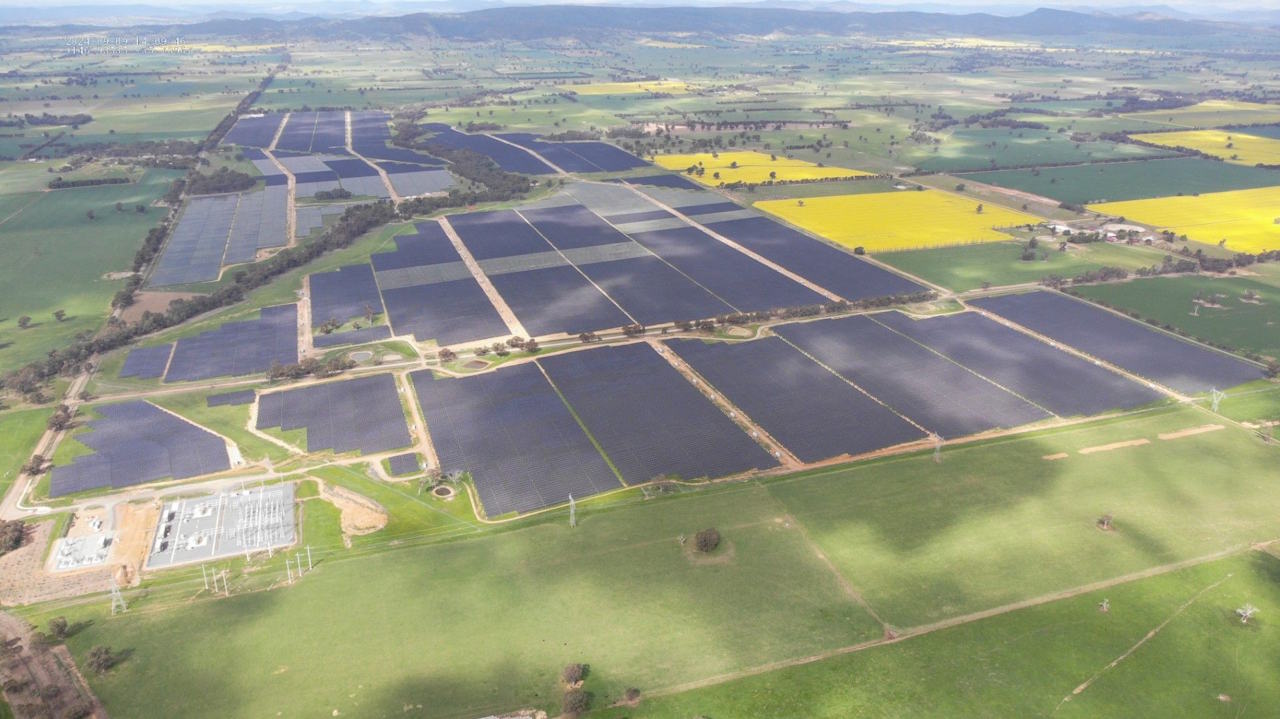
The federal government cites Amazon Web Services as an example of what is expected. Amazon, it says, plans to invest $20 billion in data centre infrastructure in Australia over the next four years, and has signed contracts with three new solar farms, including the Walla Walla solar project near Albury (pictured above).
“That’s the kind of quality investment that lifts the capability of the whole grid and means that we’re driving more investment, making electricity cheaper for ordinary Australians,” Ayres said.
Apart from Walla Walla, Amazon has signed off take deals for the Wandoan solar farm in Queensland and the Hawkesdale wind farm in Victoria, and has previously signed contracts for the Gunnedah and Suntop solar farms in NSW.
Data centres currently consume around 4 terawatt hours (TWh) of electricity a year in Australia, around 2 per cent of national electricity demand. But this is expected to treble by 2030, and grow to more than 10 per cent of grid demand by 2035, with some 10 gigawatts of connection inquiries just in NSW.
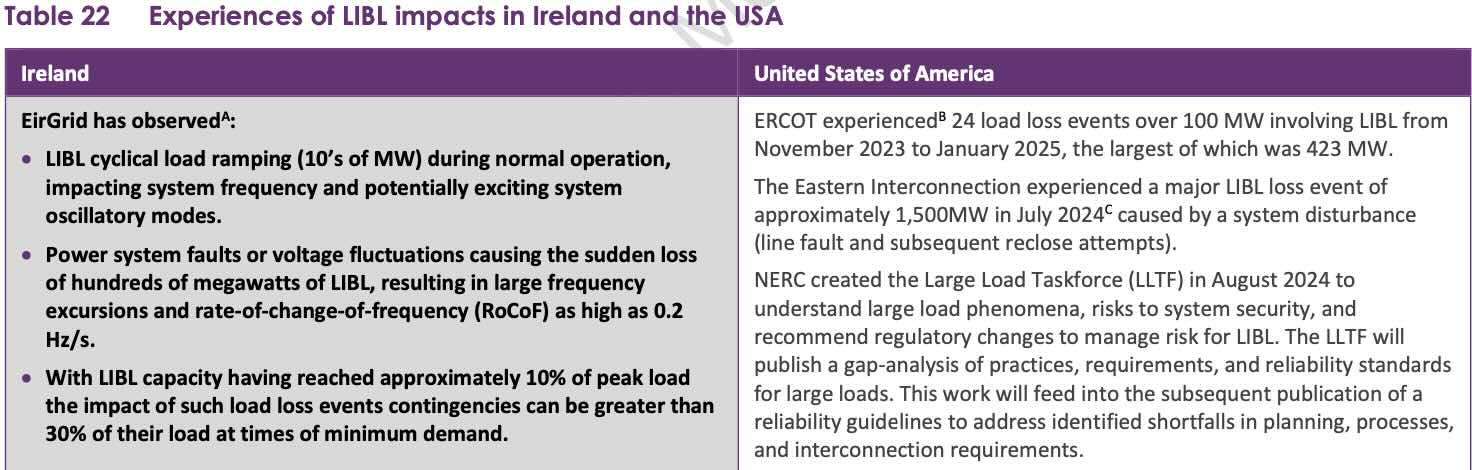
But it’s not just the amount of electricity that needs to be addressed, it is also the demand profiles of these data centres, and particularly the sudden changes that can eliminate a gigawatt of demand in an instant. This needs to be carefully managed, both through grid protocols and on-site battery storage.
The Australian Energy Market Operator, in its Transition Plan to System Security document released this week, has a whole section on data centres and other large inverter based loads (LIBL) and the implications for the grid.
“LIBL, particularly data centres, are rapidly becoming a significant proportion of total power and energy demand in major power systems around the world,” AEMO says. “International experience has demonstrated LIBL can cause challenges for power systems.”
The Transition Plan draws attention to the fact that large loads – some of the proposals in NSW are up to 1 GW – present system security risks including power system oscillations, sudden load loss or ramping, transient stability, and increased inertia requirements.
AEMO says data centres are bigger than smelter loads – currently the biggest energy users on the grid – yet are also unpredictable. AI computational processes can rapidly oscillate – in one example by 40% within seconds during different processing phases.
“This load behaviour requires even greater active and reactive power reserves to manage system security and may cause greater power system oscillations by exciting system oscillatory modes,” AEMO says.
“If not well integrated at time of connection, they have potential to pose significant risks to system security.”
But AEMO notes they also present opportunities, including from on-site infrastructure such as batteries and fly wheels, to provide demand response and the delivery of stable load blocks during events such as system restart and the new phenomenon of minimum system load (MSL), driven by the surging uptake of rooftop solar.
“It requires careful planning and ambition for the electricity sector,” Ayres said in comments to the media on Tuesday.
“We’re rapidly, led by Chris Bowen, rebuilding a modern electricity capability for Australia. We want to see these things happen in parallel in a carefully planned way.
“We want to see it in the manufacturing sector that I’ve got responsibility for, too. More electrification means lowering Australia’s emissions. More investment in Australian manufacturing in the outer suburbs and the regions means more electricity generation. All of this comes together.”
Ayres says discussions will continue with states and territories to ensure that there are clear frameworks around data centres and what powers them, as well as the water issues.
“The government is working with the states and territories, energy market bodies, network service providers and the data centre industry to harness opportunities from the growth of data centres to promote investment in renewable energy and maintain affordable energy for households and businesses,” the document says.
“Australia has the opportunity to take advantage of ambitious AI infrastructure initiatives in ways that accelerate our renewables transition and drive investment in skills, research and sustainable technologies.”
More information:https://reneweconomy.com.au/data-centres-urged-to-bring-their-own-wind-solar-and-big-batteries-so-they-dont-trip-the-grid/