

Sun Cable’s plans for second gigascale solar project open for public comment
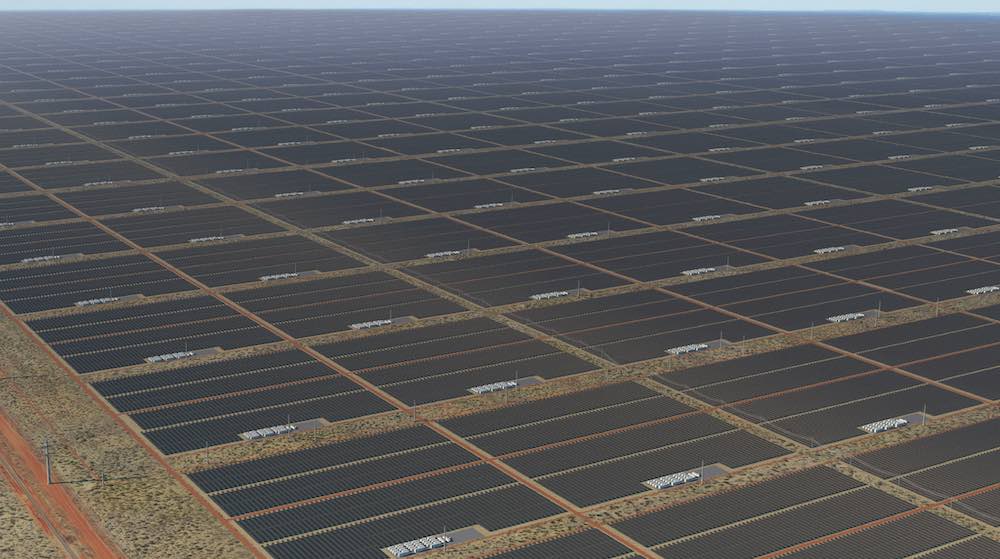
Public comments are now open for the potentially 20 gigawatt (GW) Muckaty solar project, the latest stage for Northern Territory (NT) authorities to decide just how it will assess the massive venture.
The massive project is at the earliest stages of planning, with the NT Environmental Protection Authority (EPA) in charge of the environmental assessment after the federal EPBC deemed it a controlled action in December last year — and sent the project back to the territory to handle.
The scope of the Muckaty project is for big solar blocks, each sized at 250 megawatts (MW), supported by batteries that can be built in stages as offtake agreements are signed – likely with data centre operators.
Each generation site is expected to take approximately five years to construct and would operate for approximately 70 years following commissioning, say the draft terms of reference for an environmental impact statement.
Sun Cable, which is now majority owned by software billionaire Mike Cannon-Brookes, has reduced the possible development area to a space of slightly more than 54,000 hectares, across a total area of almost 136,000 hectares, north of Tennant Creek.
It lodged the initial planning application for this part of the overall AA PowerLink project with NT authorities in October last year.
The public comments, due by June 12, will decide how the NT EPA assesses the environmental impact of the project.
The Muckaty solar precinct is another generation source on top of the already approved 10 GW of solar at Powell Creek, two hours north on the same side of the Stuart Highway.
Both of these are eventually intended to generate excess power for the massive Asia PowerLink project, the ambitious transmission line to Darwin and then a potential sub-sea link to Singapore.
The draft terms already require impact assessments on 13 different birds and mammals, “at a minimum”, as well as information on job opportunities, traffic management and decommissioning, but the NT EPA is also looking for community views on other areas of concern and ideas for potential mitigation measures.
Ironically, the NT is deeply committed to encouraging hydraulic fracking to crack open gas reservoirs in the nearby Beetaloo shale gas basin – but in the draft terms it asks the solar developer to justify how its own plans will reduce greenhouse gases and protect groundwater.
“Provide estimates of the proposal’s Scope 1 and Scope 2 GHG emissions… with a clear emission breakdown by activity, proposal phase, financial year, and for the total life of the proposal,” the draft terms say.
Under assessment are also the risk of hectares of solar panels being mistaken by migratory birds for a water source, otherwise known as the ‘lake effect’, and the potential risk to Indigenous cultural sites.
Muckaty is a former cattle station that was degraded and overstocked and ultimately returned to the Muckaty Aboriginal Corporation in 1991, which then focused on regenerating the landscape. It was then named as a potential site for Australia’s first radioactive waste storage facility, but that plan was dismissed.
It is now used primarily for traditional Indigenous uses, including conservation and managed resource protection and for low intensity cattle grazing activities.
More information:https://reneweconomy.com.au/sun-cables-plans-for-second-gigascale-solar-project-open-for-public-comment/
